

Spinal Factures
Facts | Symptoms | Prevention | Treatment options
Facts
About 10 million Americans suffer from osteoporosis, while an additional 34 million have a low bone mass that places them at an increased risk for the disease. Although most commonly found in women, 2 million men also have osteoporosis. This disease, characterized by weak bones, leads to more than 1.5 million fractures each year.
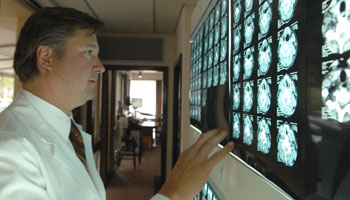
In spite of these staggering statistics, osteoporosis is often overlooked and underreported by primary care physicians. USA Today estimates that as many as half of all women with osteoporosis have not been diagnosed.
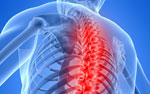
In the field of spine, osteoporosis can have extremely serious consequences. Because osteoporosis often progresses undetected, the first indication could be as disastrous as a bone fracture. These fractures typically strike an area of the body that carries the most stress, such as the spine, wrists or hips. Spinal fractures can occur without notice, as vertebrae simply compress. Compression fractures can be very painful and may lead to stooped posture, loss of height and risk of serious neurological damage to spinal nerves.
Symptoms
High risk factors that contribute to the development of osteoporosis include smoking, depression, alcoholism, poor eating habits, a family history of osteoporosis, being over the age of 50, female, inactive, thin or small and taking certain medications. Post-menopausal women are at the highest risk of developing porous bones.
The good news is that doctors have learned that the symptoms of osteoporosis are largely preventable and can be minimized. The key is early detection of the problem through osteoporosis screening using a bone densitometer. This scan determines how porous the spine, hip and wrist bones are — the most susceptible areas to the symptoms of osteoporosis. If this test reveals a low bone mass, preventive treatments can keep it from worsening and even improve bone strength, lessening the risk of fracture.
A bone densitometer test is a simple, painless scan. During the test, the patient lies on a special table while the scan device passes over the length of the body. There is absolutely no pain or discomfort involved in the test, and it takes only a few minutes.
Primary candidates for a bone densitometer test include the following people:
- Men and women over 65
- Younger postmenopausal women
- Younger women with risk factors
- Smokers
- Inactive individuals
- Those with a family history of low bone mass
- Caucasian and Asian women
- Previous broken bones
- Petite women
- Diabetics
[top]
Prevention
Everyone can do something about osteoporosis. The best way is to create a lifestyle that reduces risk factors and incorporates ways to build bone strength. These treatment methods include the following:
- Eat a balanced diet rich in calcium and vitamin D (milk, yogurt, cheese, broccoli, fish, beans and wheat bread)
- Exercise and lift weights regularly
- Refrain from smoking and excessive alcohol consumption
- Maintain good posture
- Take calcium supplements
- Consider hormone replacement therapy (HRT)
- Prevent falls and injuries when possible
[top]
Treatment
Kyphoplasty
When porous vertebrae collapse, spine surgeons must either use metal plates and screws or new kyphoplasty or vertebroplasty techniques to correct the problem. Vertebroplasty involves the injection of a cement-like substance through a needle into the defective vertebral block. The cement hardens within a couple hours, and the patient receives painkillers for the first few days after treatment. Kyphoplasty is used primarily when the front part of the porous vertebra collapses, which can cause the person to have a hunched-over appearance, also called “widow’s hump.” Kyphoplasty is a two-step process in which a balloon device is inserted into the porous vertebral block, and cement is injected into the balloon to help restore the original shape of the vertebra.
None of these treatments can correct the porous nature of a vertebra, but they do represent damage control methods used to restore correct shape in vertebrae. The best solution for osteoporosis is to detect it in its early stages and then treat the cause of osteoporosis before it weakens bones to the point of fracture and compression under stress.
[top]